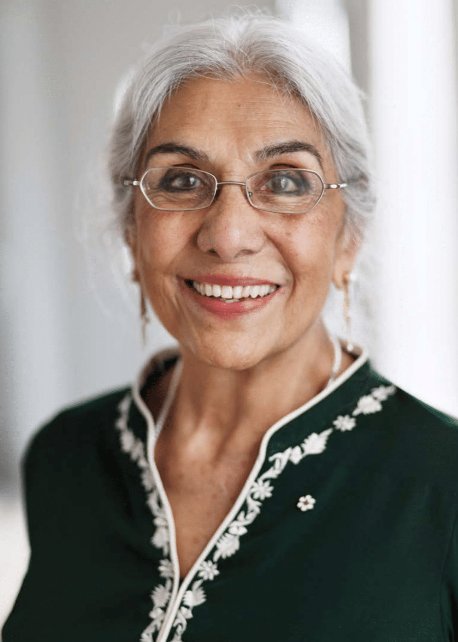
Author: Alia Hogben
I am not alone in feeling deeply disheartened after the horrors of Paris a couple of weeks ago.
As a Muslim and as a Canadian I feel conflicted and torn in making sense of the cold blooded murders, anti – Jewish killings, the attacks on Islam, and the violence used to defend Islam and the Prophet Mohammad.
The cardinal value, which all of us should hold dear, is that violence and killing is not an acceptable response to insults or offensive speech. There are alternatives and one wise response is to simply ignore! Why provide anyone with more “ammunition” and further reasons to deride you?
Secondly, killing of innocent individuals because of their religion, race or ethnicity must be strongly condemned. Along with the murders in Paris, this includes the horrifying killings amongst Muslims themselves in Syria, Iraq, Pakistan and by ISIS. How do we make any sense of the 76,000 killed in Syria in 2014?
Islam as a religion has been around for 1,400 years and if it is to survive as a religion of compassion and social justice, it does not need defending by violent intimidating actions of its adherents. It does absolutely no good for either Islam or Muslims to be perceived as a religion of self- righteousness or paranoia.
However, there are many difficult questions which remain unanswered. The Paris March was impressive and heartwarming, but was it only about freedom of speech? Were there not anti-Muslim elements? What about the message of political leaders heading the march? As someone noted,
“A march supposedly to defend freedom of expression was led by serried ranks of warmongers and autocrats from NATO war leaders to Israel’s Netanyahu to Egypt’s foreign minister…beyond satire,”
Much has been written, and some of it has been excellent such as the columns of Haroon Siddiqui and Heather Mallick of the Toronto Star, along with New York Times David Brooks.
Siddiqui rightly points out that the defence of freedom of speech is “riddled with ethical inconsistencies and reeks of intellectual dishonesty.” “Free speech is circumscribed by laws of libel, hate and religious freedom. Also, by self –restraint and public pressure, both reflective of our values.” He mentions how he and others in the field of publishing reflect on what is acceptable according to our values, and often use self-censorship.
Heather Mallick hopes that no Canadian media will reproduce any of the Charlie Hebdo cartoons. “It is unsuited to our tolerant and courteous landscape.” What a lovely way to phrase this, not that we are cowered by intimidation, nor that we demand our freedom of speech rights.
David Brooks writes that there are varying degrees of tolerance for freedom of speech in different countries, and that it is a “good time to come up with a less hypocritical approach in the U.S. to controversial figures, provocateurs and satirists.” He says that most of us do try to show a modicum of respect for people of different creeds and faiths, and we do try to open conversations with listening rather than insults.
There is hypocrisy about freedom of speech, as there are several topics which are taboo and cannot be satirized. I am not picking on any one group, but there are laws against anyone who denies the Holocaust and I understand that the magazine, Charlie Hebdo, fired a staff earlier who had made a cartoon against Christianity.
Undoubtedly just now all things Muslim are fair game, and part of the problem is that we Muslims are so quickly offended and react with violence.
David Brooks’ comment about fundamentalists, and this includes some Muslims, is worth noting:
“They are people who take everything literally. They are incapable of multiple viewpoints…Satirists expose those who are incapable of laughing at themselves and teach the rest of us that we probably should.”
This is not to detract from the Paris March, but we should understand the bitterness of other people who wonder why their tragedies and senseless killings of innocent people do not attract the same level of horror and compassion. As someone said, where were the world leaders when schoolchildren were massacred in Peshawar? Or when Boko Haram continues to commit atrocities against young girls, and killed 2,000 in one village?
A bit about the depiction of the Prophet Mohammad: The fundamental reason not to portray any prophets, including Mohammad, is to protect against any idolatry. It is the same as the prohibition of “graven images” stated in the Biblical Commandments. That is why the development of superb Islamic creation of calligraphy and beautiful geometric designs rather than the depiction of human figures.
The prohibition did not stop many depictions in paintings by Persians and Turks. The stronger ban came about later in the 19 century. I think the difference is that the depiction is either respectful or disrespectful, and the ire of some Muslims is against the mockery of a person much loved by them. I know that to many Muslims who are marginalized, poor and suffering this is another affront to them.
However, this does not allow for any violence, and sadly, though the violence harms others, more damage is done as it reflects badly on all Muslims and our faith.