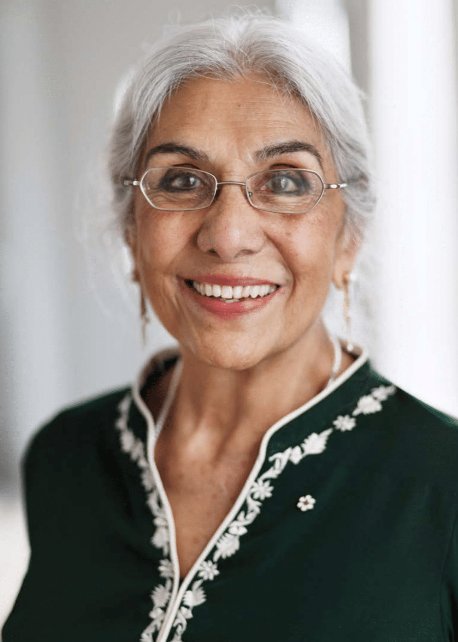
Author: Alia Hogben

I am hesitant when I write some of these columns when the subject matter is complex and I can’t do it justice in such a short space. Also, I am honest in saying that I am not an Islamic scholar, but do feel competent enough to broach these subjects.
Islam and Muslims are dominating the news, and so the English language is now replete with Islamic/Muslim concepts and terms. Along with words such as Jihadis, Sharia and Caliphate, we are now having to understand about the so -called “divide” between Shia and Sunni Muslims. This has become a short hand term to describe the conflicts in the Middle East where political power struggles between states and groups are using religious differences as justification.
Tragically, Muslim majority states are manipulating the divisions for political reasons. The power struggle between Iran and Saudi Arabia is hypocritically being set up as the struggle between stalwart defenders of Shia and Sunni Islam. It is nothing more than a jostling for political power not only in the region but in other Muslim majority states. Sadly, neither Saudi Arabia nor Iran are states worthy of being emulated as true practitioners of Islam.
There are differences between Shia and Sunni Muslims but these are NOT severe enough to cause battles and bloodshed. These differences were over the succession of power and leadership following the death of the Prophet Mohammad, and much like the Catholic- Protestant divisions, continue into the present.
Both Shias and Sunnis have the same beliefs and practices and there is little difference between the two. The major difference is about authority, and whether the family of the Prophet has hereditary privileges. Shias believe in the family of the Prophet and accept their authority over the community. Sunnis believe that the Quran and the Prophet’s example are sufficient guides, and though his family are revered they are not seen as hereditary leaders. Sunnis believe the Quranic statement that the Prophet was human and his role of messenger and religious authority is limited to his person, and not passed on to the family members.
The Shias hold the Prophet’s family in high regard and his descendants are considered “imams” or religious leaders who can provide continuing guidance to believers. This is why Ali, the fourth Khalifa, and his descendants are seen as carrying forward the role of leadership. Ali was a much loved cousin of the Prophet, his son in law, and was the second believer in Islam, after the Prophet’s wife, Khadija. For these reasons, Ali is still held in high esteem and is mentioned in Shia prayers as the next leader after the Prophet. For example, the Aga Khan is the religious head of the Ismaili Muslims because he is a descendant of Ali. Shias are called Ahl al Bayt, meaning the people who believe in the family of the Prophet, including Fatima and Ali.
The first four successors of the Prophet were all related to him. Abu Bakr and Omar were fathers in law; Usman was a close and early Muslim, while Ali was his cousin and son in law. The tensions were that a group wanted Ali to succeed rather than the other three, and it was almost 24 years after the death of the Prophet when Ali became the fourth Khalifa. Unfortunately, this strife between some groups continued, and after Ali’s death his son Hussain and his followers were killed by fellow Muslims at the battle of Karbala.
This battle has become significant and is mourned for the murder of the Prophet’s grandson every year by Shias.
Shias combine political and religious leadership such as in Iran, while Saudi Arabia has a bad marriage of political convenience between their tribalism and the religious teachings of the severe and intolerant Abdul Wahab for Sunnis.
The hostility and hatred being spewed amongst Muslims themselves is shameful and not reflective of Islam. The killing and displacement of non-Muslims, and the treatment of each other is tragic.
Why don’t these Muslim leaders and followers pay heed to these verses of the Quran?
“Those who have attained to faith in this divine writ, as well as those who follow the Jewish faith, and the Christians, and the Sabians – all who believe in God and the Last Day, and do righteous deeds – shall have their reward with their Sustainer; and no fear need they have, and neither shall they grieve.”
And again,
“For every community faces a direction of its own, for which God is the focal point. Vie, therefore, with one another in doing good works. Wherever you may be, God will gather you all to Himself…”
If it is clearly stated in the Quran that God accepts these differences between communities and their ways, then why should this not include the differences in practices between Muslims themselves? Instead, some Muslims who are arrogant and full of righteous intolerance are viciously labelling other Muslims, such as the Shias, as unbelievers and even killing them.
Instead of listening to reasonable leaders who are calling for mutual tolerance such as the imam of Al Azhar University, too many of us are heeding the diatribes on websites which are leading to violent thoughts and actions. What we must remember is that many of these are being funded either by Saudi Arabia, some Gulf States, or Iran. Muslims should be ashamed that anyone of us is paying any attention to these screaming hate mongers, calling each other “kaffirs” or unbelievers
Surely what should matter is that in fundamental beliefs and practices, there are no difference between Sunnis and Shia, so why can’t Muslims follow the dictate of the Quran –“To you your way and to me mine.” After all, the journey of this life is to follow the path, that is, the true Sharia, and seek God.