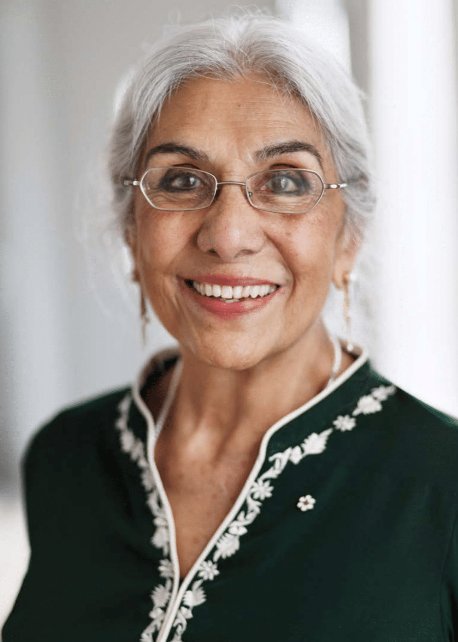
Author: Nazila Isgandarova
A large number of government representatives, senior officials, delegations from the NGOs, and experts have come from all around the world to New York to attend the 57th session of the Commission on the Status of Women that began on March 4th until March 15th. They want to discuss and assess the status of the CSW’s work for gender equality and the empowerment of women. The representatives of the governments and members of the parliaments also share their experiences and good practices. However, what is also remarkable is the participation of the NGOs, who question their respected governments’ legislations and practices that push them further to achieve the new and improved legal, socio-economic and political equality of women that drastically help to eliminate all forms of violence against women.
An example of global and national NGOs activism during CSW57 is evident with the March 12th statement of a number of global and national NGOs titled as “Statement of Feminist and Women’s Organizations on the Very Alarming Trends in the Negotiations of Outcome Document of the 57th Session of the UN Commission on the Status of Women.” The statement was drafted by Center for Women’s Global Leadership (CWGL) and International Women’s Rights Action Watch Asia Pacific (IWRAW Asia Pacific) are the main organizations and endorsed by Amnesty International ANIS – Institute of Bioethics, Human Rights and Gender – Brazil, Asia Pacific Forum on Women, Law and Development (APWLD), Asia Safe Abortion Partnership, Fiji Women’s Rights Movement Namibia Women’s Health Network Rutgers WPF, Netherland Women’s Environment and Development Organization (WEDO), and Women’s Global Network for Reproductive Rights (WGN).
These remarkable organizations all around the world criticize the work of the CSW and express their disappointment for “wavering in its commitment to advance women’s human rights.” They also invite the participant states to reaffirm their commitment in respecting and promoting women’s human rights by following the standards of the Convention on the Elimination of All Forms of Discrimination Against Women, the Vienna Declaration and Programme of Action, the Declaration on the Elimination of Violence against Women, the Beijing Declaration and Platform for Action and the International Conference on Population and Development Programme of Action.
The statement is an explicit expression of global and national NGOs alarming worries at CSW57. There are many reasons for worrying about CSW57. First, some governments at CSW57 attempt to re-open negotiations on the already established international agreements on women’s human rights.
Second, many world governments, especially developing countries, fail to fulfill their commitments to promote, protect and fulfill human rights and fundamental freedoms of women.
Third, there is the lack of a common language among the participant states in the definition and intersectionality of violence that women and girls are experiencing, including in relations to sexual and reproductive health and rights, sexual orientation and gender identity, harmful practices perpetuated in the context of negative culture and traditions, among others. For instance, Canada, Switzerland and members of the European Union (EU) have underlined the importance of 1325 and 1820 that acknowledge linkages between gender equality, peace, security and development; however, Russia and some African countries have opposed the linkages. One of the diplomats of the African group mentioned that they want a reference only to “relevant Security Council resolutions,” and suggested the deletion of actual references to 1325 and 1820. It means that they do not want to accept the relationship between between gender equality, peace, security and development. Many NGOs do not accept this position. Mavic Cabrera-Balleza, international coordinator for the Global Network of Women Peacebuilders, a programme partner of the International Civil Society Action Network, for instance, mentioned that “We believe there cannot be sustainable peace if violence against women persists.”
Fourth, the participant governments attempt to negotiate and define women’s rights on behalf of culture, tradition, and religion. However, they forgot that any authentic customs, tradition or religions never justify discrimination and violence against women and girls. Therefore, any violence against women and girls should not be tolerated.
The statement issued by the global and national NGOs “remind” not only the participant states but also UN CSW that the “CSW is the principal global policy-making body dedicated exclusively to gender equality and advancement of women with the sole aim of promoting women’s rights in political, economic, civil, social and educational fields.” Unfortunately, omission of the linkage between war, peace, security and gender equality by CSW57 is interpreted as “an outrage” by Cora Weiss, president of the Hague Appeal for Peace, who told to IPS that “The problem with this CSW is that it is ignoring both war/militarism and 1325 on the official side.”
What is explicit at CSW57 that the global and national NGOs challenge conservative mind-set not only in their states, but also at UN. They call upon CSW that it must ensure that the participant governments fully implement existing international agreements on women’s human rights and gender equality.
In general, the outcomes of CSW57 and also previous sessions cannot be satisfactory and outstanding without the paying attention to the concerns of NGOs. The expectations of NGOs from their respected governments and UN CSW create a well-maintained balance between the fear and hope, truth and false, reality and myth. As it is evident today, NGO’s criticism ensures that UN CSW do not lower the bar for women’s human rights because of the national governments’ pressure. NGOs make sure that the outcome document of CSW57 will further advance and secure women’s human rights. Therefore, the member states of the UN and the various UN human rights and development needs to recognize and support the important role of women’s groups and organizations for their brave work to be at the forefront of challenging traditional values and practices and undemocratic rules and socioeconomic and political injustices in society and the world.