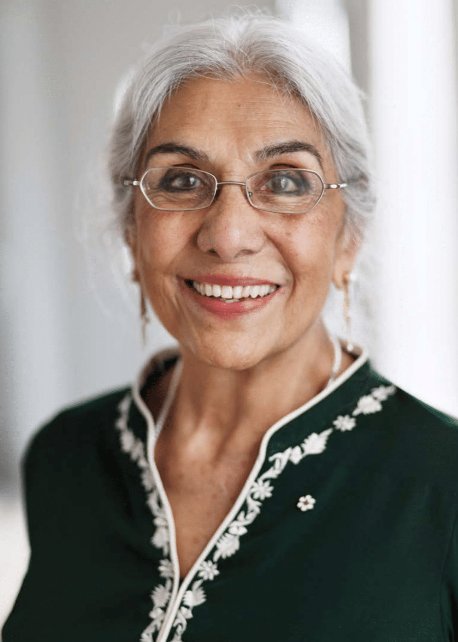
The following is a transcript of a speech delivered by CCMW’s Executive Director, Alia Hogben, upon receiving an honorary doctorate from Queen’s University on 11 May 2011.
Thank you, Principal Jean Stairs, Professor Pamela Dickey Young and Principal Daniel Woolf for this great honour.
I am proud and humbled.
This recognition belongs to a host of others, such as the women of the Canadian Council of Muslim Women, who stand up for our faith – Islam – while challenging prejudices from within the Muslim communities, and from without.
I take comfort in the words of Margaret Mead:
“Never doubt that a small group of thoughtful citizens can change the world. Indeed, it is the only thing that ever has.”
I have always loved being a Muslim. The simplicity of the faith, the constant call for reason, and values of compassion, social justice and equality all ring true for me.
However, it has become increasingly difficult to be a Muslim in the last 30 years. There are times when my faith is shaken and I am full of doubts, but I don’t see remaining silent or being silenced as a viable alternative.
Fortunately for me, I was raised in a family which strongly believed in Islam, an Islam which was reasoned, flexible and allowed for great diversity. The Muslim practices were seen as assisting me to be a better person as I walk towards God—my sharia, my beaten path to the source of water. Living Islam included warm and loving relationships with people of other faiths –Hindus, Parsis, Buddhists, Jains and Christians.
There was little talk of homogeneity or literal interpretations, and more about the possibility of reform and adaptation to our realities. When my husband Murray and I were young and idealistic, we believed that in Canada with its plurality, we Muslims would have a faith consistent and congruent with human rights.
What happened to our dreams?
How and why did the direction veer so dramatically in the last 30 years?
In Canada we are affected by what happens in other parts of the world.
Some of the reasons are the long- lasting ill effects of colonialism followed by the lack of hope of any democracy or human rights for the people in many Muslim majority countries .The ambivalent relationship with the West has fueled disenchantment and cynicism.
It is hard to trust the West when its motives are often hypocritical and self serving.
Because some Muslim majority governments identify themselves as secular, but are corrupt and totalitarian, there is great cynicism about secularism or separation of religion and state. Surprisingly, Saudi Arabia and Iran, as examples of religious states, are not criticized enough for their corruption or repressive regimes.
Let us hope the recent events in the Arab world will indeed lead to wonderful changes for Muslims and for the countries.
As of now, true intellectual Islamic scholarship has not been fostered. Rather, petro-dollars are lavished on the spread of a narrow interpretation of Islam. In spite of this, there are some remarkable scholars whose works demonstrate the tolerance and reform possible within Islam. Sadly, little of this scholarship reaches the ordinary Muslim, because this is silenced, and instead the most visible, pervasive and well funded movement amongst Muslims continues to be for a literalistic and intolerant interpretation.
Islamists are defined by Islamic scholar Asma Afsaruddin as those who believe in a
“highly politicized version of Islam whose genesis occurred in the early 20th century largely as a reaction to the abolition of the caliphate in 1924, and to the debilitating effects of Western colonization.”
The prominent issues for Islamists are the establishment of an Islamic state; the definition of political authority; assumed immutability of sharia; the status of women and the nature of jihad.
How is it that I – along with many other believing Muslims – am so fearful of religious states governed by an interpretation of God’s laws? On what do I base my dread of Islamists, evangelical Christians, or Jews who call for such a state?
For some Christians, Jesus’ instruction of “Render unto Caesar the things that are Caesar’s and to God the things that are God’s” does not apply, and they want their interpretation of Christianity to be part of public policies. I am fearful of this even in my wonderful Canada.
Why do we not remember that the demand for theocracy to implement God’s will is in truth more about the rule by religious leaders than about God’s will.
The inane question which is continuously asked is whether Islam is compatible with democracy and human rights. Sorry, but this same question can be asked of all the religions. The question should really be whether religious peoples’ values and practices are congruent with democracy and human rights, and if not, then these cannot, and should not, be imposed on any citizen.
Fortunately we are in an era of universal human rights, and ideally these should not differentiate between individuals, whatever the religion or gender or race or ethnicity.
To me the values of Islam – social justice, compassion and equality – are the basis for the rights of citizens in a democracy.
If I want all these rights, I also want them for everyone else. These I would not have if any state had a religion. I fear any politician who wants his faith’s beliefs to govern me.
President Obama in a speech on religion and politics, talks of how impossible it would be to integrate religion with politics for a pluralistic society. He speaks of the inerrancy and uncompromising dictates of God’s commandments which would cause mayhem if put into practice. He uses the example of Abraham who truly believed that God commands him to sacrifice his son. Obama notes that as no one else could hear what Abraham heard, so the least we would do if we saw a man raising a sword over a child, is to call the police or child welfare services!
I was proud when Prime Minister Jean Chretien, on the subject of same sex marriage, said that though he was a practicing Catholic, as the Prime Minister of Canada he could not impose his private views on all Canadians.
Nehru of India said of Indian secularism:
“We call our state a secular state. What exactly does it mean? It does not obviously mean a state where religion is discouraged. It means freedom of religion and conscience, including freedom for those who have no religion…The word secular, however, means something more to me…it conveys the idea of social and political equality.”
Fortunately, there are Islamic scholars such as Abdullahi an Naim; Mohammed Hassan Al-Amin, Murad Wahba and Asma Afsaruddin, who think they need a secular state to be truly Muslim; that a religious state leads to dictatorship with belief in absolute truths; and that secularism is a cultural necessity for Muslims.
There are Muslims who claim Muslim history shows that the Prophet Mohammad, peace be upon him, initiated the ideal of a religious, Islamic state. These Muslims are inaccurate, when they insist that the treaty of Medina, 622 C.E, made by the Prophet Mohammad, was about the founding of a religious state. The treaty was not about Islam or Muslims or the practice of religious laws, but about peace and good relations between the citizens of Medina who were pagans, Jews and Muslims.
The Medina treaty was followed by another in 628 C.E – the Charter of Privileges – with the Christians of the Monastery of St Catherine of Mount Sinai. Again, this was about the protection of Christians and not about theocracy or an Islamic state.
Parts of the Charter state that Mohammed, son of Abdullah, makes a covenant with Christians to defend them and their rights, as they are his citizens. Neither their judges nor the monks in the monasteries are to be removed, and no one is to destroy a house of their religion. If a Christian woman marries a Muslim, she is not to be prevented from visiting her church to pray. Their homes and churches are to be protected and no Muslim is to disobey this covenant till the Last Judgement Day.
When I talk of my fears of any religious state, I have to use the concept of secularism. But tragically for many Muslims secularism is seen as a Western import and anti- religious.
Instead of seeing a secular state as protecting the individual’s practice of faith many religious people see it only as anti- religion. In truth, the state should be neither religious nor anti-religious, but rather a-religious, so that citizens would have freedom of religion, and not the imposition of any state religion.
Secularism does not mean that believing individuals have to leave their faith at some door to participate in politics. However, what it does mean is that these beliefs must be translated into universal principles, respectful of the diversity of a pluralistic society of believers and non believers alike. The concepts of common good and public reason include the universal human rights of all citizens and these should be the basis of a democracy.
Secularism is not the panacea, nor does democracy always work for everyone, but I know these are better than a religious state whose so called leaders take it upon themselves to interpret God’s laws.
As the Islamic scholar Abdullahi an Naim explains:
“The premise of an Islamic discourse is that each and every Muslim is personally responsible for knowing and complying with what is required of her or him. The fundamental principle of individual personal responsibility that can never be abdicated or delegated is one of the recurring themes of the Quran.” P10.
He adds,
“I need a secular state in order to live in accordance with Sharia out of my own genuine conviction and free choice…”
I derive great comfort in what God has promised in the Quran that God has willed upon himself the law of grace and mercy.
Surely, God’s will is for grace, mercy, compassion, equality and social justice for all.
These values should govern all aspects of our lives, and any democratic government or state should practice these, and not any specific religion’s interpretation of God’s will.
I would like to tell you of the years of support and encouragement my husband Murray has given me. I thank him for so much, especially for the innumerable cups of tea he has made, as I while away the hours in front of the computer.
All my efforts are truly the joint efforts of both of us.
A special recognition to my superb grandchildren, may their future be bright!
Thank you!