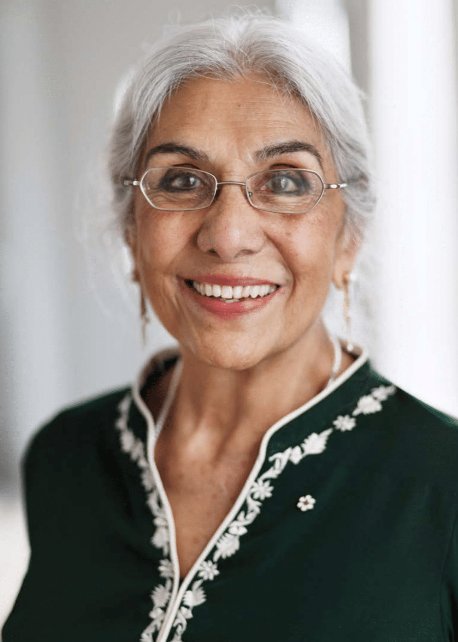
Author: Alia Hogben
The Parti Quebecois government has decided to follow the lead of Europe and esp. France, in banning religious symbols in the public arena. It has put forward a Quebec Charter of Values which proposes that public services will not be provided to anyone wearing the yarmulke, the hijab, the niqab or a turban. As well, if anyone wants employment with the public sector, they too must not wear any visible symbols.
The battle is on, but what is not being discussed openly by the government is that the rationale is racist and discriminatory, no matter how they phrase it.
The government hides behind the argument that this is about laicite – the separation of state and religion. I do understand that laicite is much more than secularism, and that part of the fear of overt religiosity is due to Quebec’s own conflicted history with the power of the Catholic Church. Yet, ironically, one of the reasons given to retain the large cross in the Quebec legislature is that Catholicism is integral to Quebec identity.
As a Muslim and a minority, I do want a secular state which allows me to practice my faith, while also ensuring that no other faith dominates. So I agree wholeheartedly that there are many areas where religious beliefs and practices should not be allowed to override civil laws. It is true that at times the demands for religious accommodation are not reasonable and these should be rejected, but surely what one wears should not be seen as a major accommodation.
I understand the fears that newer immigrants will change what is being called “Canadian culture,” but surely we all know that culture is not stagnant and is fluid and changeable? I refute the same argument against some Muslims who insist that there is a “Muslim culture” to which all diverse Muslims should adhere to. Sorry to tell these individuals there ain’t no such consistent, uniform culture for any of us.
I may not agree with the way an individual chooses to dress, but surely this is not a significant enough issue of the separation of religion and state, and it should not be seen as a slow slippage into religious fanaticism. Even I, as one individual, can identify issues which interfere with equality, fairness and justice, and these are the issues we should be addressing. I can predict that discriminating against clothing will only exacerbate racism and discrimination. Imagine not getting a job because of what is on top of my head rather than my skills and abilities.
About 50 years ago, Canada had a white-only immigration policy and was even reluctant to let too many Jews in. Perhaps some would like a return to those halcyon days of whites only; with no laws to protect the Quebec French culture and language; and a return to the rejection of the First Nations people.
However, Canada made a deliberate decision to change its immigration laws and welcome those of us who are visibly different and of diverse faiths. Can we now stop immigration of those of us who look different and are of the non-Christian faiths, or should we work towards solutions so that we can all participate in the creation of a “Canadian culture” shared by all of us and enriched by the contributions of diverse peoples?
It is crucial that no accommodations should be made of beliefs and practices which are clearly against the universal human rights as articulated in our Charter. For me this is the fundamental, core value of “Canadian culture.”
I think we are creating, not a mosaic, but a tapestry of diverse hues which is the Canadian culture and of which we can all be proud. Why leave any of us out of this rich tapestry?
It is sad that the recent Angus Reid poll found many Canadians, esp. from Quebec, do not like those of us who are different. This to me means that there is a shared responsibility between “older Canadians” and the newer ones. The newer ones must make conscious choices as to what they should retain and what should be discarded of their ethnic or religious practices which contradict fundamental human rights of all.