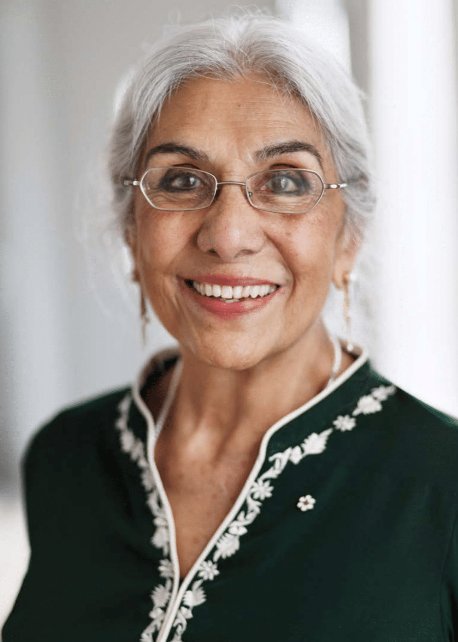
This column was originally published in the September 15th, 2012 edition of The Kingston Whig-Standard
Last Sunday was Grandparents’ Day, which is recognized in the United States, but not here in Canada.
I have been cynical about special days for various people, such as Mother’s or Father’s Day or Valentine’s Day, as I think mostly these were created for commercial purposes. On the other hand, a special day in the year allows us to focus on a group of individuals who have influenced our lives and are such an important part of us.
As someone has said “If I had known that grandchildren were going to be so much fun, I would have had them first.”
Many of us, including Muslims, emphasize the extended family of all relatives, and consider them as vital in our lives. This is beyond the nuclear family of only parents and children, and we do this because we value the contribution, as well as the care and welfare of each member.
There is a lovely Quranic verse:
“Do good to your parents. Should one of them, or both, attain to old age in thy care, never say “Ugh” to them or scold them, but always speak to them with reverent speech, and spread over them humbly the wings of thy tenderness, and say, “O my Sustainer, bestow Thy grace upon them, even as they cherished and reared me when I was a child.”
The value of the extended family is being recognized more and more because the nuclear family is under stress. In many instances, both parents work outside the home, the divorce rate is high and thus children require a strong network of support from grandparents, aunts, uncles, the school and other community members.
This is what wise people mean when they say it requires a whole village to raise a child.
Grandparents can provide a child with affection, care and guidance. They can be role models, and surely we agree that the more love and attention children receive, the more they grow in strength and confidence.
As Margaret Mead said, “Everyone needs to have access both to grandparents and grandchildren in order to be full human beings.”
There is much joy in being with children and their innocence and trust is heartwarming, and as Dostoyevsky said, “The soul is healed by being with children.”
By the way, you don’t have to be a biological grandparent to be an “honorary” grandparent. Similar to organizations such as Big Brothers and Big Sisters, perhaps there should be another organization of grandparents for hire as well. I have heard of children visiting seniors in seniors’ residences because this has proven to be beneficial to both children and elders.
With marriage breakdowns and custody battles, grandparents are often losers as it seems that their rights are not recognized, and both they and their grandchildren lose access and visiting rights.
There is a Grandparents Rights Association, which is advocating for such issues as a child’s right for love. As in child welfare, the standard of the “best interest of the child” should be applied when grandparents seek access to their grandchild. This is certainly not to pit grandparents against parents, but to see what benefits a child.
Having grandparents in a child’s life should not mean that grandparents end up with so much babysitting that their own lives are depleted of friends or other activities. This slides into elder abuse and we must be aware of this aspect.
For example, there is concern that many immigrant families bring over their elderly parents who are not seen as people to be cared for, but more as babysitters so that busy parents can go out to work. This trend is worrisome because it is not a reciprocal relationship and often grandparents are not given the choice but seen as essential caregivers and housekeepers.
We need to be vigilant about any form of abuse, and vulnerability must be continuously assessed both for children and for seniors, as age, frailty, dependency, susceptibility and the capability of being wounded is always present.
Sadly, in some instances, families instead of being places of refuge and safety, are the places where abuse and pain is caused to various members.
This phenomenon is not limited to any one ethnic community. As one woman has commented, one mother can raise 10 children but 10 children cannot look after one mother.
At times the closed family structure hides and controls making it difficult for one of the members to reach out for help.
As the author, Pearl Buck has said, “Our society must make it right and possible for old people not to fear the young or be deserted by them, for the test of a civilization is the way that it cares for its members.”
Fortunately there are organizations that are good resources, such as the Ontario Network for the Prevention of Elder Abuse, and the Ontario Seniors Secretariat.
As in Africa, where grandparents have become the sole families for children who have lost their parents to AIDS, in Canada also many grandparents have taken over the role and responsibilities of becoming primary caregivers for their grandchildren. The option of giving up their grandchildren to child welfare is not seen as serving the best interest of the child or the grandparent.
As you can imagine, the daily care and financing of raising a child can be a heavy burden for some grandparents. I recommend that the government provide financial assistance to the grandparent caregiver and more importantly that other members of the family pitch in and help by relieving them of some household chores and some babysitting.
My prayer for each of us is that as members of a family, even amidst pain and suffering, we experience warmth and caring, because without that our lives will be barren and joyless.