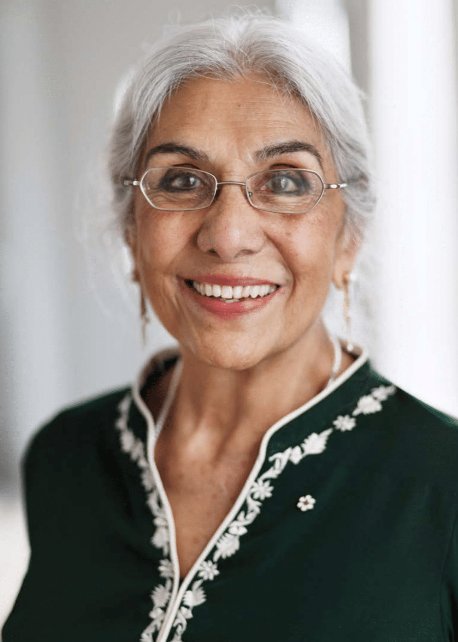
This column was originally published in the July 21st, 2013 edition of The Kingston Whig-Standard
“They desire a better country” — Desiderantes meliorem patriam — is the motto of the Order of Canada.
I am simultaneously proud and humbled to be chosen to join the ranks of this fellowship of Canadians. The order was established in 1967, as part of the centenary celebration and is to be awarded in recognition of “outstanding merit or distinguished service by Canadians.”
The order is given to individuals, and there are those who stand independently on their own merit, but for some of us it is an honour to be shared with the group we represent.
It is the Canadian Council of Muslim Women who passionately do “desire a better country” for all Canadians, and especially for those of us who “appear” to be different because of religion, race or ethnicity.
As Margaret Mead said, “If we are to achieve a richer culture, rich in contrasting values, we must recognize the whole gamut of human potentialities, and so weave a less arbitrary social fabric, one in which each diverse human gift will find a fitting place.”
It is a matter of great pride that the two Canadian Muslim women who have been accorded the Order are both members of CCMW — the founder, Dr Lila Fahlman, and now me.
CCMW was founded in 1982, the same year as the Charter was enacted. The two events were not linked then but over the years the Charter’s values have been the guiding principles of our work. Our own goal is for the equality, equity and empowerment of women, to be recognized as equal and full citizens, while being part of the diversity of Canada.
Across the country, CCMW women, sometimes with little support, have worked tirelessly to create change, within our faith and within our country, so that women, and especially Canadian Muslim women, can claim their rights as articulated in our religion and in our country’s constitution.
CCMW’s guiding principles are based on Islam and on the laws of Canada. We have undertaken many projects such as the struggle against any religious family laws to be applied in Canada; the research done regarding the status of Muslims in Canada; the various publications on issues affecting Muslim women and their families, and position papers on topics such as femicide and polygamy. We are currently working with youth across the country to assist them to be actively engaged in civic matters with members of other faiths.
Even in Canada we are overwhelmed by the worldwide tidal wave of literalism, patriarchy and conservative religious interpretations which denies equality, tolerance and social justice for many of us. There are times when we are disheartened and wonder if any of our work creates change, but to be passive — or worse — to be silent is not an alternative.
So what does it mean to me to receive this honour?
To me, it recognizes the efforts at the grassroots level of a small group of women to create change, to assist others to become part of the fabric of Canada, to be fully active in civic matters and to feel empowered to make their own lives better. It is a trickle in the vast scheme of things but how superb it is to be affirmed for our efforts!
It recognizes the magnanimity of Canada to pay heed to its citizens, especially to those of us who are newer and facing issues that were not probably faced by those who have been here longer.
It acknowledges that in Canada each of us can truly integrate the various parts of our identity under the encompassing identity of being Canadian. It is here in Canada that each of us can be proud of our specific faith, ethnic or racial background because we can claim these as integral to being Canadian.
It feels good to have this recognition publicly proclaim to all Canadians that advocacy, activism, altruism are all well and alive amongst us. By such a declaration of faith we can stand against pettiness, self-centredness, prejudice and anti- women rhetoric the world over.
This Canadian affirmation not only gives hope to Canadian Muslims, but will be seen internationally as another example of Canada’s celebration of its diversity.
Of course, cynics will ask, “What about racism and prejudice and lack of opportunities that still exist in Canada for many of us?” This honour does not contradict them, but it does confirm that we also have a place of honour, not merely as one individual but as a collective of Muslims and newer immigrants.
Without sounding too grandiose, I hope that Canadian women such as the “Famous Five” who fought for women’s rights — Emily Murphy, Henrietta Muir Edwards, Nellie McClung, Louise McKinney and Irene Parlby — as well as Viola Desmond, the African-Nova Scotian who in 1946 fought against racial segregation, would see us as following in their tradition! We are continuously grateful to our non-Muslim sisters who have supported us in our struggle for equality.
I agree wholeheartedly with Margaret Mead, who said, “Every time we liberate a woman, we liberate a man” and “A small group of thoughtful committed citizens could change the world. Indeed it is the only thing that ever has.”
Thank you Canada … proud to be Canadian.