This column was originally published in the October 31st, 2009 edition of The Kingston Whig-Standard
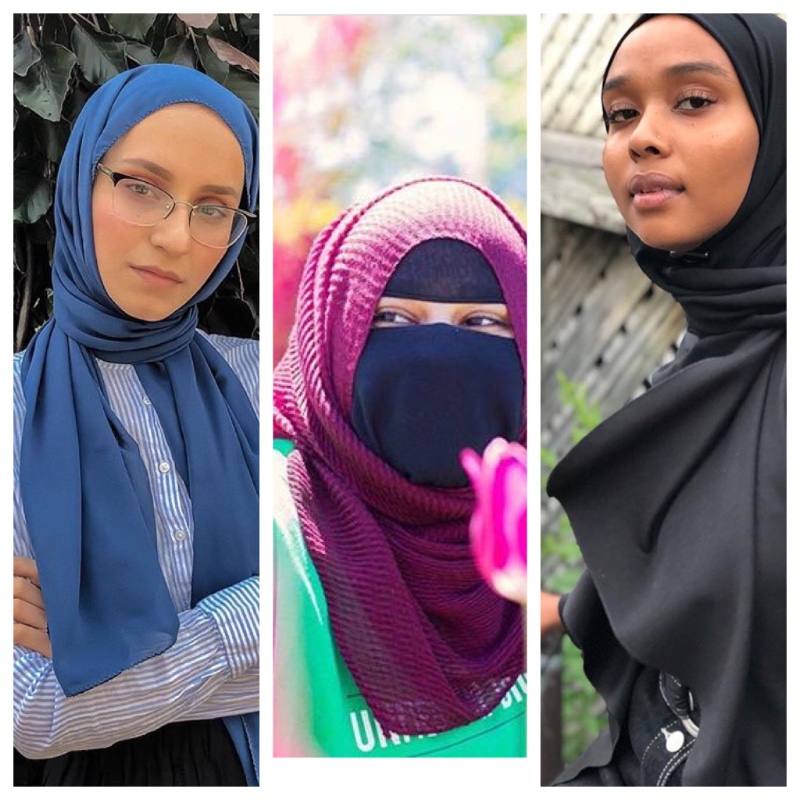
Women’s clothing continues to be an issue for public discussion. Recently media stories of anorexic scantily dressed fashion models have been juxtaposed with stories of Muslim women fully covered – including the faces – with the niqab or burkha.
The discussion regarding Muslim women’s clothing is controversial and arouses strong emotions. But surely the issue is nuanced and complex, as clothing has diverse meanings, not only for the women who cover but for the rest of us.
The topic has, within it, issues concerning religious freedom; oppression; woman’s choice; political Islam; sexism and racism.
However, for me, it is important first to discuss the issue of women’s bodies, not only Muslim women’s.
Why this emphasis on women’s bodies? It’s almost as if our bodies are dismembered from our minds, intelligence and emotions?
Is a woman’s main function to either arouse the male libido or to inhibit it? Why is it the woman’s responsibility to ensure males of the species behave themselves? If we cover ourselves are we then protected against violence?
Issues such as unequal treatment, lack of opportunities, violence and racism affect our lives far more than what we wear.
As for Muslims, there is no agreement regarding the covering of a woman.
The Quran asks men and women to be modest, and the one Quranic verse asks that women cover their bosoms. It is the interpretation of this verse which is controversial amongst Muslims. However, even this verse cannot be interpreted to mean the full covering of a woman’s body and face.
In the early history of Muslims, the Arabs came in contact with other cultures. These cultures influenced the practice of the faith, and their definition of modesty was varied and accepted.
The recent search for a “Muslim” identity which distinguishes a Muslim from a nonMuslim – has caused a demand for homogeneity and conformity amongst some Muslims.
Part of the move has included a strong push to specify a “Muslim” garb which seems more like a modernized version of Arabic clothing rather than the traditional clothing of non –Arab Muslim women.For those who object – Muslims and non Muslims – this “uniform” garb is not a religious one, but is a demand of Political Islam. Political Islam teaches a narrow understanding of Islam and a greater role for religion in the political arena.
Others object to the full covering as a symbol of oppression of women, of segregation and the loss of a woman’s full identity.
Some Muslims argue that women’s clothing is about religious freedom. Others say that it is a woman’s choice to cover or uncover herself, and no one can dictate what she can wear – neither the state nor the male elite.
But there are issues related to covering oneself totally.
A critical, thorny issue is whether it is a woman’s free choice regarding her own clothing, or is she so influenced that she is forced by religion, culture, men of her family or community?
There are likely as many reasons as there are women as to why they wear the niqab. Perhaps she is making a statement by fully covering herself, creating her own identity, or possibly it is her reaction against what she perceives as abuse of other women’s bodies. Perhaps she sincerely believes that her religion demands this covering.
Whatever the reasons, the full covering does separate the woman, hides her identity, discomforts others, limits her freedom of movement, restricts her vision and may affect her health – but the uneasy question is: Do I have the right to tell her how to clothe herself?
This covering does create barriers and interferes with interaction and communication. It is disingenuous to insist that this should not interfere in relationships.
I don’t think that clothing has to do with religious freedom for an entire group, but it may be a personal decision of a woman as to how she wants to express her piety.
If the clothing creates fears about the political use of religion, then we must address this. However the call to legislate against clothes seems extreme.
There are limits to choices and there is appropriate dress in certain circumstances. In some situations, the woman must accept that the needs of others take priority over her clothing, such as in court, for safety or for security reasons.
For some this is a form of self segregation from the non-Muslim society. If so, this should be a grave concern for all Canadians.
As Canadians, we must participate as actively as possible if we are to gain full citizenship with all its rights. We cannot complain of being treated as second class citizens with racism and prejudice as our standby, if we don’t become engaged.