This column was originally published in the November 21st, 2009 edition of The Kingston Whig-Standard
I have just returned from participating in the Second Session of the United Nations Forum on Minorities Issues, which was held in Geneva in November, 2009.
The Geneva Session focused on the political participation of minorities, which is seen as the gateway for full participation of all citizens. The purpose was to discuss the obstacles facing minorities in their countries, and to develop recommendations.
The Report of the Session will be presented to the Human Rights Council in March 2010. The U.N. then forwards these recommendations to individual countries asking them for a plan of action regarding implementation.
As with all U.N reports, the crux is that these recommendations cannot be enforced, but the international pressure on each country can hopefully create change. It is also incumbent on us, who are involved, to have continued discussions with our own governments to ensure that the recommendations are implemented.
The issues are significant, from denial of citizenship to restricted participation, discrimination, and a lack of political parties outreach to minorities.
At the Session, it was discouraging to hear from so many minorities, in so many countries, who are blocked in so many ways from participating in the political process. The Dalits from India spoke about the discrimination due to the caste system; as did the religious minorities from Bangladesh, and many groups from Iran. One of the groups, which touched me, was the Romas who are so discriminated against in several European countries.
Although there were about 100 invited groups, the various governments also participated so that there were over 500 people present.
One of the protocols is to allow country representatives to respond to the issues raised by their minorities. This makes one wonder how free and how brave the groups felt in publicly criticizing their totalitarian or discriminatory countries.
Though the focus was on political participation it was acknowledged that discrimination led to exclusion in many aspects of living, including access to employment, housing and lack of cultural rights.
There was a specific session focusing on minority women and I was one of the speakers.
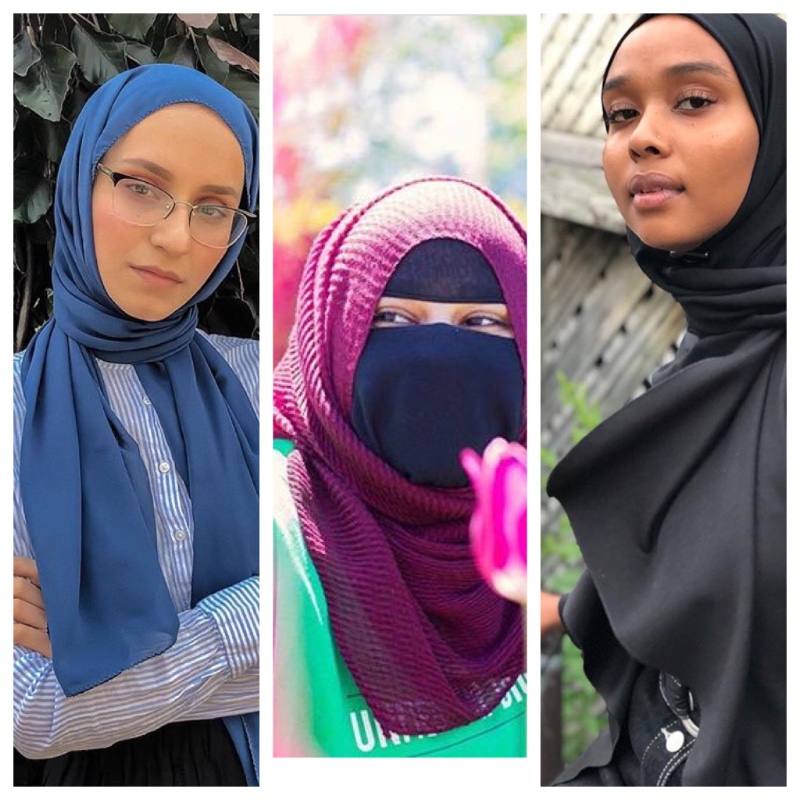
I said that sadly, the tragedy of 9/11has cast long and continuing shadows which affect Canadian Muslims. There is an erosion of human rights, and one worrying example is that our youth face racism and discrimination. Some youth talk about feeling like second class citizens. This is a grave concern for us, as they are not only our future but the future citizens of Canada.
It is true that many Canadian Muslims are being treated differently, and the examples are the recent instances of Somalis who are Canadian citizens and yet were not allowed to return home. Omar Khadr is a child soldier and yet the government is not advocating for his return to be tried in a Canadian court. Maher Arar is the best known example of our government’s failure to safeguard its own citizens.
I did state that there are internal issues within Muslim communities and in some instances a reluctance to become fully engaged in our adopted country.
I recommended that Canada not only articulate the values of citizenship – including political participation – but set “enabling mechanisms” such as the fostering of civil society; provision of adequate resources for education and settlement services; actively pursue building trust to develop a sense of belonging by inclusive and welcoming policies for full participation.
The state should monitor its own actions which negatively impact all its citizens; and safeguard any erosion of human rights.
We cannot be smug and must address our problems. For example, political apathy and cynicism is not limited to minority youth, and yet our government is not doing enough to engage our young in the political process. The political parties have difficulty attracting youth and a lack of funds can be a major obstacle for anyone who wants to stand for election.
However, acknowledging the problems in Canada – not just for immigrants but for our indigenous peoples – must be tempered with the fact that we are blessed in many ways. Without belittling our problems, and even with prejudice and discrimination, we are able to practice our faith, and hold on to our cultural practices far better than many in other countries.
This attention on minorities does not mean that this would lead to fragmentation, rather it is to include all citizens in their various aspects of full participation.